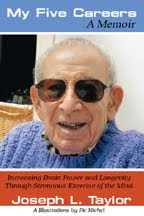
Tuesday, August 25, 2009

Further Thoughts on the New Feminine


As if we don’t have enough portentous questions to solve, let me add another. Who will replace the vanishing Playboy Magazine “Playgirl” as the next popular ideal of American Beauty? With obesity in both sexes already beyond fifty-percent and growing, can the longings of the American male accommodate themselves to the reality of the New Feminine, or – or what?

There is a self-parodying joke about the Jewish man who, when told that the elephant population in a region of India was declining at an alarming rate, asked if that was good or bad for the Jews? We must ask, is the eclipse of the long-legged, slim and admirably proportioned, high-cheeked, sexy woman good or bad for men?

Every age has had its definition of femininity. In recent memory there were the Gibson girl (ample), the flapper (bold, unconventional), Rosie the Riveter, (World War II worker), the Bobby-Soxer, and of course, the Playgirl. Obesity was not in style. The early American woman tended toward sliminess, for among other factors, the hard physical life of a pioneering and the dominance of the farm life kept the weight down.

Concepts of physical attractiveness are, as anthropological studies have shown, malleable. Over the centuries, concepts of female physical beauty have ranged widely each having their day. Venus was the ideal in ancient times; in medieval Europe diminutiveness and daintiness in feet, hands, breasts and long necks were prized; women of some weight are considered desirable in parts of the world (the (Middle East); gaudily painted faces in some cultures (African) are the custom; the short and squat women of the Arctic have no difficulty in finding mates. In contemporary times the suburban, gym-muscled, self-assured woman, a more attainable model than Playgirl, command deep respect. Question: How flexible will the American man now be in his concept of female beauty? Judging from worldwide cultures – and from what I have observed daily in my strolls around my home town (Salem MA), he will meet the test of gallantry.

Did I say male sexual selection – and I could add female sexual identity – is malleable? In fact it seems that men and women will buy whatever happens to be in stock at the time. Maybe sexual selection should be noted and reviewed in the fashion magazines, the way high skirts-low skirts and tight jackets-loose jackets are critiqued.

More Later, Joe

Friday, August 14, 2009

The Eloquence of the Common Man

The many scholarly books on the subject describe the newcomers to America as “waves of immigrants and “hordes of New Americans;” refer to their habitats on the Lower East Side of Manhattan as “tenements” and “railroad chain cold water flats”. The streets were described as teeming with “rickety pushcarts’ and their goods for sale; and filled with children at play, dodging pedestrians and street vehicles, shrieking with joy while putting pedestrians at risk. amidst the squalor, this iconic site is also home to one of the great stories of/in the growth of America. The years were the last quarter of the 1800’s –1915. Except for the novels and short stories about the lives of immigrants, the sociological treatises fail to convey an understanding of these flesh-and-blood people. Let me tell you about a small community of Jewish men in Wilkes-Barre, PA, many from Russia, Poland, and Romania, as I knew them during the years 1927-1935.


First, the common part. These men were tradesmen – bakers, butchers, grocers, peddlers in the commodity-starved rural countryside, small shopkeepers, salesmen. The men made a living for their families, some quite successfully, and blended smoothly into the general life of the city. They were mostly Socialists, victims of cruel, anti-Semitic programs, and without exception were virulently anti-Communist. They voted routinely but futilely in presidential elections for Norman Thomas; and most important for this piece I am writing, they were all members of the Workmen’s Circle, an organization, as the name clearly denotes, for the working man. The Workmen’s Circle had a substantial building of its own on “The Hill” in Wilkes-Barre, called “The Lyceum,” that served as a forum on social and political issues, and as a cultural center for the continuity of Jewish life.


A group of perhaps twenty-five men met every Sunday morning for lox and bagels, and for discussions. My father and his younger brother, Israel, were as close and affectionately attached as any brothers I have known. We visited Israel and his family several times a year and each Sunday my father, with me in tow, attended the morning meetings at the Lyceum. Some members dressed in suits, others in sweaters. Of the many intriguing experiences I had at these gatherings, the one I remember most is the weekly “redde” session, the Yiddish word for speakers and speech-makers, -- everyone spoke Yiddish -- and the subsequent discussions.


Now for the eloquence. These ‘tradesmen” spoke fluidly, colorfully, to the point, with an aggressive intelligence and thorough understanding of the issues on tap that day, political and cultural, from current legislation to literature. Each man seemed to live for these Sunday mornings. They knew it, and put a zest into the proceedings that was infectious. I was amazed. Each man had some schooling in their homeland, some less some more, but they were avid readers of the newspapers and journals -- Yiddish and English. The bond among them and the respect they had for each other was moving. In common, they had survived successfully, first in their flight to America, and then in becoming Americanized and acquiring citizenship. Israel spoke one Sunday about his escape from Lithuania, a real thriller (discussed at length in my book). Every man had a story. At the time I knew these men they were in the prime years of life. I often wonder, with gratitude for what they taught me, how the remainder of their lives turned out.


More later, Joe

Wednesday, July 29, 2009

Who Am I?

WILLIAM JAMES, THE PHILOSOPHER, SAID that everyone has as many different selves as there are people who know him. Each person, from his wife and children to the butcher, the baker and the candlestick maker, perceives the same man differently. Ever since I heard that in Philosophy101, I have been confused. Who really am I? Which one of me is the real Joe Taylor? For that matter, who are you? If we don’t even know whom we are how can we ever solve global warming or cure cancer? The guy who figures that out should get two Nobel Prize, one for the day dreaming that is the precursor to original thinking, the second for his solution. I already qualify for one of those talents. The prospect of such riches and fame out there waiting for me to “originate” has temporarily distracted me from writing. Some may think it presumptuous of me to regard myself so highly, but a fact is a fact however absurd. I’d like to say more about that but I emptied the bottle of the stuff I was drinking to gird myself for scribbling this.

Am I deranged? The word “telefunken” keeps popping into my head and I can’t get rid of it. “Telephfunken” has something to do with telephones. Maybe it means telephone. That’s a hard way to say “telephone,” but it’s typically German. That reminds me. The recently deceased Walter Cronkite’s name was originally spelled “Chronkite”, (with the” “h” after the capital ”C”). Spelled that way the word means illness. My authority is a relative of Mr. Cronkite. Anyway, is “deranged” one of my selves? If so, I want to make it clear that there are many good parts to me. I know, because my barber told me. This barber was once at a funeral where not the preacher, not any person who spoke had a good word to say about the deceased. In desperation, the minister asked if there was anyone attending the service who had a good word to say about the dead man. The barber stood up and said, “I always found him an easy man to shave.” So there.

How can I not be out of my mind if I have to contend with so many different personalities mixed up in me and battling to be Joe Taylor? May the best man win. But seriously: Auguste Descartes, the French philosopher, said “I think therefore I am.” So, is it our cognitive capacities that define us? Emanuel Kant, the German, said, “I ought therefore I can.” Or is it our moral character? Calvin Coolidge, the President who preceded President Herbert Hoover said, “Business is the business of America.” That argues for our work life. As for me, I think it is our love life – the people we love, in the various ways that love can be expressed -- that defines our souls.

More Later, Joe

Thursday, July 16, 2009

Hospital Joe


(The following is an edited version of an article Joe wrote a few years ago. Joe had minor surgery at Salem Hospital Thurday, July 15. He will be home Friday and is, of course, already back to business.)

It happens everywhere I go. There was girl in Philadelphia once, she walked toward me on a center city street. She wore a shiny tan skirt, a white blouse, blond hair falling to her shoulders, a page boy bob framing her fresh face, under a totally blue sky and sunshine all around. She passed me by like I didn't exist.

I had quite a conversation with her in my daydream prone mind:

Hey you -- yes you, in the navy blue power suit and pink blouse, with the gold necklace around your neck, and swinging that black alligator attache case, striding along confidently on your way to a corporate takeover. You passed right by and didn't even see me. But that young hunk coming the other way, you gave him a good look. OK, I don't really expect that you will pay any attention to me. My cane gives me away. But even at my age I don't like to be erased. In the inarticulate lingo of today, it feels a little like, you know, being wiped out.

Am I poking fun a myself or am I serious? Both. That girl in Philadelphia reminded me of other times and other girls, as an old photograph tells of times that can be retrieved. I used to buy camelia corsages for girls like her. Sometimes I would skip lunch or eat apples from the trees on campus to have the money. There were rides in automobiles and I would hold the girls tight. And the dancing! I inhaled the slightly scented aroma from her body and we danced cheek to cheek then, not like today where dancing looks like prizefighters squaring off in the ring. There's so much more to dancing than what what they show on TV. That's the serious part. As for the self-mockery? That comes from remembering my age.

Thursday, July 9, 2009

Day Dreaming's Revenge

(Continued from July 8, 2009)

The art of day dreaming grows with practice. (I should have spent as much time on my violin). From childhood fantasies fed by envy, it was a natural progression to the satisfying fancies of revenge. At the reunion I noted the wrinkling of childhood and adolescent beauty. I gloated that I was one of the few who was still working at his music. (I had played in a community symphony orchestra for thirty-nine years). As for automobiles, I claimed superiority by virtue by my well-practiced and principled disavowal of conspicuous consumption.

Childishly malicious? If it's good enough for John Updike it's good enough for me. In his novel "Bech At Bay" the protagonist (Updike's alter-ego) gets revenge by killing the critics who had previously scorned him. (Never too late for me to find a new hero). Updike has only to put down his vengeful pen to return to reality. For the ordinary day dreamer there is always a wailing child who needs us, or bills to pay, or the lawn to mow. I could never day dream my way through those trials.

You can rest assured in your day dreams, Joe

Wednesday, July 8, 2009

The Rewards of Day Dreaming

(continued from July 7, 2009)

My talent for [daydreaming] appeared at an early age. To my mortification, I saw that many of my childhood contemporaries were clearly more handsome, more clever, more worldly than I. From first grade on they received more valentines from the prettiest girls. In eighth grade they won the music memory contest and in High School they were the first to obtain a driver's license. Clutching my few valentines, struggling to distinguish Mozart from Beethoven, gaping at a yellow convertible speeding out of the school parking lot, I honed the self-isolating art of reinventing myself. I day dreamed that I received a valentine with a heart drawn on it from the prettiest girl in the class; that I could differentiate Prokofiev from Mahler and that I was an adolescent sophisticate driving with one hand on the wheel and the other around a girl. Thus, the motives in attending my 50th high school reunion were not entirely pure.

More Later, Joe

Tuesday, July 7, 2009

Day Dreaming

(I should preface this post by stating that Day Dreaming was first published in a literary journal in Winter 1999.)

The ability to pass time gracefully is an art that makes idleness attractive. Recently I was housebound and largely immobilized for two weeks recovering from surgery for a bone spur. Happily, I was well prepared to endure the inactivity. While some may have chafed at the enforced leisure, I enjoyed these doldrums.

Good habits, we are told, are learned in childhood. So are bad habits, and thus it was that in childhood I learned the pleasures of passing time by doing nothing. To appreciate this skill, one must understand that idleness is as much a state of mind as it is an absence of activity. The essential requirement is a shameful surrender to nothingness. Day dreaming, with its misty, evanescent, self-hypnotic qualities fits that definition. Self-serving and self-indulgent, it is perfect comfort for one's privations.

More Later, Joe